
Our MRT-Moral Reconation Therapy® results demonstrate measurable, long-term outcomes across justice, behavioral health, and treatment systems. MRT-Moral Reconation Therapy® supports positive decision-making and behavior change through a practical, structured approach. As the sole provider of MRT-Moral Reconation Therapy® training and materials, Correctional Counseling, Inc. supports programs implementing MRT-Moral Reconation Therapy® with consistency and fidelity.
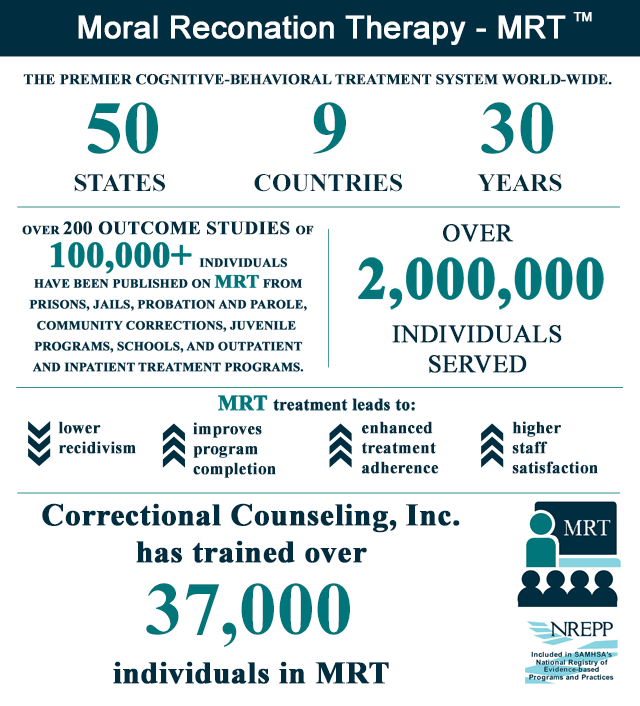
MRT-Moral Reconation Therapy® results have shown consistent effectiveness worldwide. Developed in 1985 by Dr. Gregory Little and Dr. Kenneth Robinson, MRT-Moral Reconation Therapy® continues to produce measurable outcomes across diverse populations and service settings.
re-arrest and re-incarceration rates appear in programs using MRT-Moral Reconation Therapy®. As a result, these outcomes demonstrate MRT-Moral Reconation Therapy®’s ability to support accountability and sustained behavior change.
appear in multiple MRT-Moral Reconation Therapy® studies. In addition, these findings show MRT-Moral Reconation Therapy®’s lasting impact well beyond program completion.
reflects the cost benefit estimated by the Washington State Institute for Public Policy for MRT-Moral Reconation Therapy® programming. As a result, MRT-Moral Reconation Therapy® demonstrates strong financial value alongside behavioral outcomes.
appears in a cost-benefit analysis of 12 Virginia adult drug courts using MRT-Moral Reconation Therapy®. In turn, lower outcome, victimization, and placement costs confirm MRT-Moral Reconation Therapy® as a cost-effective intervention.
appears in a study of 19 MRT-Moral Reconation Therapy®-based juvenile drug courts. In this analysis, recidivism among MRT-Moral Reconation Therapy® participants measured 35.7%, compared to 52.7% in comparison groups. As a result, these outcomes exceeded the 6.5% average reduction reported in broader juvenile drug court studies (Mitchell et al., 2012).
Because of these consistent outcomes, MRT-Moral Reconation Therapy® holds recognition as an evidence-based program from the Substance Abuse and Mental Health Services Administration (SAMHSA). Overall, this designation reflects decades of research supporting MRT’s effectiveness across justice, treatment, and behavioral health systems.